



In my fifteen years as an automotive electrical specialist, I have seen countless drivers stranded because of a simple misunderstanding of their vehicle’s charging system. The alternator is the heart of your car’s electrical power, responsible for charging the battery while the engine runs. If you are wondering how many volts should a car alternator put out, the answer is not a single static number. A healthy alternator should typically produce between 13.5 and 14.5 volts while the engine is running. If your readings drop below 13 volts or spike above 15 volts, your vehicle’s sensitive electronics and battery are at risk. This guide will help you understand the nuances of electrical output to ensure your vehicle remains reliable.
Determining the Normal Output Range of Your Alternator
To assess the output of car alternator health, you must differentiate between resting voltage and charging voltage. When the engine is off, a fully charged battery should show approximately 12.6 volts. Once you start the engine, the alternator takes over the electrical load.
Typical Car Alternator Output Standards
Under normal idling conditions, a typical car alternator output is usually around 13.8 to 14.2 volts. This range is designed to overcome the internal resistance of the battery and effectively push current back into the cells. According to standards established by the National Institute for Automotive Service Excellence (ASE), maintaining this voltage is critical for preventing battery sulfation.
Variations Under Electrical Load
The voltage will fluctuate when you turn on high-draw components like headlights, air conditioning, or seat heaters. A functional voltage regulator should compensate for this increased demand immediately. Even under a full electrical load, the voltage should remain above 13.0 volts to prevent the battery from discharging. If the voltage dips significantly when the AC is turned on, the alternator is likely failing to meet the car’s current requirements.
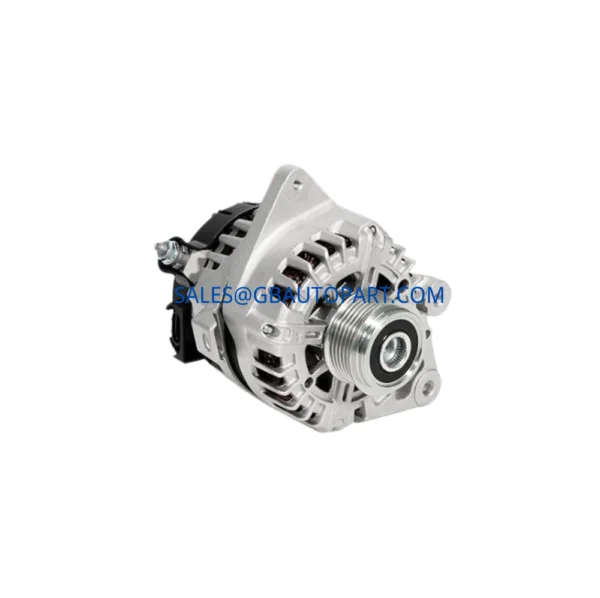
Understanding Typical Car Alternator Output and Amperage
While voltage measures the electrical pressure, amperage measures the actual volume of current flowing through the system. You cannot judge an alternator by voltage alone. A unit might show 14 volts but fail to provide the necessary amps to keep the car running under load.
Measuring Amperage vs. Voltage
A typical car alternator output in terms of amperage varies by vehicle size, ranging from 60 amps for compact cars to over 200 amps for luxury SUVs. Modern vehicles are equipped with “smart” charging systems that adjust output based on battery temperature and real-time consumption. Checking the amperage output ensures the alternator can support all active electronic modules simultaneously.
Impact of Engine RPM on Power Delivery
Alternators do not produce their maximum rated current at idle. Most units require the engine to reach 2,000 to 2,500 RPM to achieve their peak output of car alternator rating. If your dashboard lights flicker only while you are stopped at a red light, it suggests the idle amperage is insufficient.
Calculating Car Alternator Wattage Output for Modern Needs
As vehicles become more technologically advanced, the car alternator wattage output has become a vital metric for manufacturers. Wattage is the total work capacity of the charging system, calculated by multiplying volts and amps.
The Math Behind Electrical Power
For a standard vehicle with a 100-amp alternator running at 14 volts, the car alternator wattage output is 1,400 watts. High-end luxury cars often require upwards of 2,500 watts to power multiple infotainment screens and advanced driver-assistance systems (ADAS). Ensuring your alternator’s wattage exceeds the vehicle’s total peak consumption is the only way to avoid electrical brownouts.
Why Over-Voltage is Dangerous
If the voltage regulator fails, the alternator might put out more than 15.5 volts. This “overcharging” scenario can literally boil the electrolyte inside your battery and fry the car’s Engine Control Unit (ECU). Any reading consistently above 15 volts requires immediate mechanical intervention to prevent catastrophic electronic failure.
Professional Steps to Test the Output of Car Alternator Health
You don’t need a massive laboratory to check your charging system. A simple digital multimeter is enough to perform a preliminary diagnosis at home. I always recommend testing at the battery terminals first, then directly at the alternator post.
Performing a Surface Voltage Test
Set your multimeter to the 20V DC setting. With the engine running at 1,500 RPM, touch the red lead to the positive terminal and the black lead to the negative. A reading between 13.5V and 14.5V indicates the alternator is performing its basic charging function correctly.
The “Full Load” Diagnostic Test
To see how the system handles stress, turn on the high beams, the heater fan on high, and the rear defroster. The voltage should stay above 13.0V. If it drops into the 12V range, the alternator’s internal diodes or brushes are likely worn out. Systematic load testing is the standard method for identifying an alternator that is beginning to fail under pressure.
Selecting High-Quality Replacements for Long-Term Reliability
Knowing how many volts should a car alternator put out is the first step in deciding when to replace your hardware. If your testing reveals inconsistent voltage or insufficient wattage, it is time to look for a professional-grade replacement. You should prioritize parts that meet or exceed Original Equipment Manufacturer (OEM) specifications.
When judging whether a replacement part is suitable for your infrastructure, look for units with documented thermal testing. Many aftermarket alternators fail because they cannot handle the extreme heat of a modern engine bay. I recommend exploring a professional alternator and starter motor catalog to find units engineered for durability. Selecting a replacement with a high-purity copper winding ensures better conductivity and a more stable voltage curve.
Furthermore, always verify the amperage rating on the housing of the new unit. Installing a 60-amp alternator in a car that requires 120 amps will lead to immediate system failure. Choosing the correct replacement hardware is essential for protecting your vehicle’s battery and overall electrical integrity.

Conclusion
The core conclusion is that a car alternator should put out between 13.5 and 14.5 volts to maintain a healthy battery and power the vehicle’s electronics. A typical car alternator output must remain above 13.0V even under a heavy electrical load to ensure the car alternator wattage output meets the demands of modern driving. By performing regular voltage checks and replacing worn units with high-quality parts, you can prevent expensive repairs and ensure your vehicle starts every time.
FAQ
1. Can a battery be good but the alternator be bad?
Yes, this is very common. A good battery can hold a charge, but if the alternator isn’t putting out enough volts, the battery will eventually die. Regularly checking the output of car alternator levels helps you identify a failing charging system before the battery is ruined.
2. Is 13.2 volts enough for a car alternator?
13.2 volts is on the low side and may indicate that the alternator is struggling. While it might keep the car running, it may not be enough to fully charge the battery, especially in cold weather. A healthy typical car alternator output should ideally stay above 13.5V for optimal battery health.
3. Why does my alternator voltage drop when I am idling?
Alternators spin slower at idle, which naturally reduces their current production. However, the voltage regulator should still maintain at least 13.0V. If the voltage drops below 12.8V at idle, it could indicate worn internal brushes or a loose drive belt.
4. How does temperature affect alternator voltage?
Batteries require higher voltage to charge in cold weather. Many modern alternators have temperature sensors that increase voltage to around 14.8V in the winter and decrease it in the summer. Temperature-compensated charging is a standard feature in high-quality modern alternators to prevent battery damage.
5. What happens if my car alternator wattage output is too low?
If the wattage is too low, the car will begin drawing power from the battery while you drive. This leads to dimming lights, slow power windows, and eventually the engine stalling. Matching the alternator’s wattage output to your vehicle’s factory requirements is non-negotiable for system stability.
Reference Sources
ASE (Automotive Service Excellence) – Electrical Systems Diagnostic Standards
NHTSA – Vehicle Safety and Electrical Systems Maintenance
SAE International – Surface Vehicle Standards for Charging Systems