


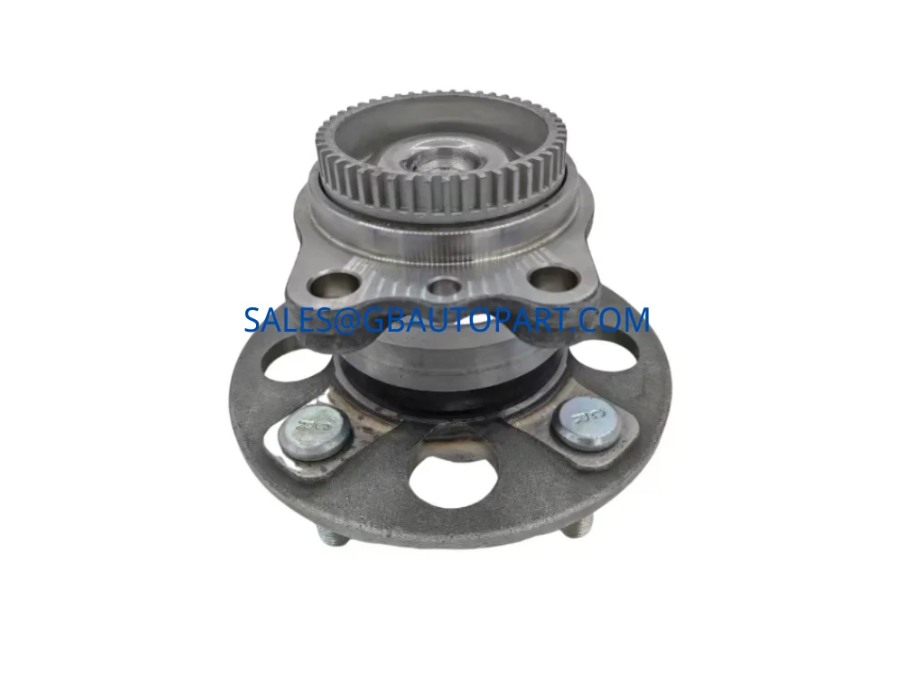
The performance and longevity of any vehicle heavily rely on the seamless operation of its core mechanical systems. Among these, the Transmission system stands out as a critical component, translating engine power into usable torque for the wheels. Deep within this complex mechanism lies a specific yet vital part: the 52750-H7100. This product number identifies a crucial bearing and hub assembly, often integrated into the transmission or driveline, that ensures smooth power delivery and reduces frictional resistance. This comprehensive guide will explore the significance of the 52750-H7100, its technical specifications, application in Transmission systems, and why understanding this component is key for automotive professionals and enthusiasts alike.
Unpacking the Significance of 52750-H7100
In the automotive world, every part number tells a story of engineering precision. The 52750-H7100 is typically associated with a specific type of bearing assembly, frequently a Wheel Hub Bearing or a component within the differential or main gear train of a vehicle’s Transmission. Its primary function is to facilitate the rotation of mating parts while simultaneously handling significant radial and axial loads. Without a properly functioning bearing, friction skyrockets, leading to excessive heat, premature wear of surrounding components, and ultimately, catastrophic system failure.
Technical Overview and Core Features
Engineering for Durability and Load
The design of the 52750-H7100 is a testament to modern materials science and mechanical engineering. These components are usually fabricated from high-grade, heat-treated steel alloys, specifically chosen for their exceptional hardness, fatigue resistance, and ability to withstand continuous, high-stress operational cycles. The internal geometry, including the raceways and rolling elements (balls or rollers), is meticulously machined to ultra-fine tolerances.
A key feature is its often-sealed design. Modern automotive bearings like the 52750-H7100 often come pre-lubricated and sealed for life. This sealing mechanism is crucial, as it keeps contaminants—such as road grime, moisture, and fine metal particles—out of the sensitive internal components, thereby drastically extending the operational life and ensuring consistent performance. Furthermore, the precise configuration determines how efficiently loads are distributed, which is paramount for maintaining the structural integrity of the entire Transmission assembly.
Precision in the Transmission Environment
Within the Transmission, the 52750-H7100 may be utilized in various capacities, perhaps as a countershaft bearing, a differential side bearing, or an output shaft support. Its application here demands a higher level of precision than many other vehicle parts. Any slight deviation in rotational alignment or undue clearance can introduce vibration (Noise, Vibration, and Harshness or NVH) and seriously compromise the gear meshing process. The precise fit and minimal runout of the 52750-H7100 ensure that gears align perfectly, minimizing noise and maximizing the efficiency of power transfer from the engine to the drive axles.
The 52750-H7100 in Transmission System Applications


The Transmission system is responsible for matching the engine’s output speed and torque to the driving conditions. This requires numerous rotating shafts and gears, all supported by robust bearings. The location and function of the 52750-H7100 are critical to this process.
Supporting the Power Flow
In a typical drivetrain, the power flow from the engine goes through the clutch (or torque converter), into the Transmission gearbox, and then through the differential to the wheels. If the 52750-H7100 is a gear or shaft bearing within the gearbox, its role is to maintain the exact axial and radial positioning of the gears, even under heavy shifting loads or high-speed operation. This prevents gear separation, known as ‘gear walk,’ which can instantly destroy the gear set. Consequently, a well-specified and high-quality 52750-H7100 contributes directly to smooth, quiet shifting and reliable torque delivery.
The Impact on Fuel Efficiency and Longevity
In an era emphasizing efficiency, friction management is vital. A high-quality 52750-H7100 minimizes rolling resistance within the Transmission. Less resistance means less energy is wasted as heat, which translates directly into improved fuel economy. Over the long term, this superior quality also prevents the cascading failures often seen when cheaper, less robust bearings are used. By distributing loads evenly and resisting wear effectively, the component safeguards the much more expensive main shafts, casings, and gear clusters, providing significant long-term value to the vehicle owner.
Identifying and Addressing Bearing Failure
Understanding the signs of a failing 52750-H7100 is crucial for proactive maintenance. Early identification can save thousands in repair costs.
Common Symptoms of Wear
The most common symptom of a worn or damaged bearing is noise. This noise often manifests as a persistent humming, whirring, or grinding sound that changes pitch or intensity with vehicle speed or when the load on the transmission is varied (e.g., accelerating vs. coasting). Secondly, excessive vibration felt through the chassis or steering wheel can signal issues, particularly if the part is a wheel-hub bearing assembly related to the differential’s output. Finally, in extreme cases, leakage of lubricant from the seal or noticeable free play in the rotating assembly can indicate catastrophic failure, necessitating immediate replacement.
The Value of Genuine or High-Quality Parts
When replacing the 52750-H7100, the choice of replacement part is paramount. Due to the precision required, using generic or low-quality components is a false economy. Non-OEM parts may lack the necessary metallurgy, manufacturing tolerances, or seal quality, leading to rapid recurrence of the problem. Investing in a high-quality replacement, such as those available from reputable sources like gbautopart.com, ensures that the vehicle’s integrity and performance specifications are maintained, ultimately offering the customer peace of mind and maximizing the vehicle’s operational life. This commitment to quality reflects a correct and ethical business and maintenance practice.
Conclusion: The Unsung Hero of the Drivetrain
The 52750-H7100, while a small component in a vast system, holds an oversized responsibility for the health and performance of the vehicle’s Transmission. Its role in reducing friction, absorbing load, and maintaining the geometric integrity of rotating components cannot be overstated. By providing superior quality parts and sharing expert knowledge, we empower users—from professional mechanics to dedicated vehicle owners—to make informed decisions. Understanding and properly maintaining vital elements like the 52750-H7100 is the key to achieving optimal driving experience and sustained vehicle reliability.e, we empower users—from professional mechanics to dedicated vehicle owners—to make informed decisions. Understanding and properly maintaining vital elements like the 52750-H7100 is the key to achieving optimal driving experience and sustained vehicle reliability.
Frequently Asked Questions (FAQ)
Q1: What is the primary function of the 52750-H7100 in the Transmission?
The primary function of the 52750-H7100 is to support rotating shafts or assemblies within the Transmission or driveline. It minimizes friction, manages radial and axial loads, and ensures the precise alignment of internal components (like gears), which is essential for smooth power transfer and operational efficiency.
Q2: How often should the 52750-H7100 be inspected or replaced?
Unlike fluids, bearings do not have a standard replacement interval. They are typically replaced on condition—meaning when they exhibit signs of wear, such as persistent humming, grinding, or excessive play. Regular inspections for noise or vibration during routine maintenance checks are the best practice.
Q3: Can I drive my vehicle if the 52750-H7100 is making noise?
Driving with a noisy or failing 52750-H7100 is strongly discouraged. A damaged bearing can quickly disintegrate, leading to metal contamination throughout the system and potentially causing catastrophic, irreparable damage to the entire Transmission or adjacent axle components. Immediate professional inspection and replacement are necessary.