


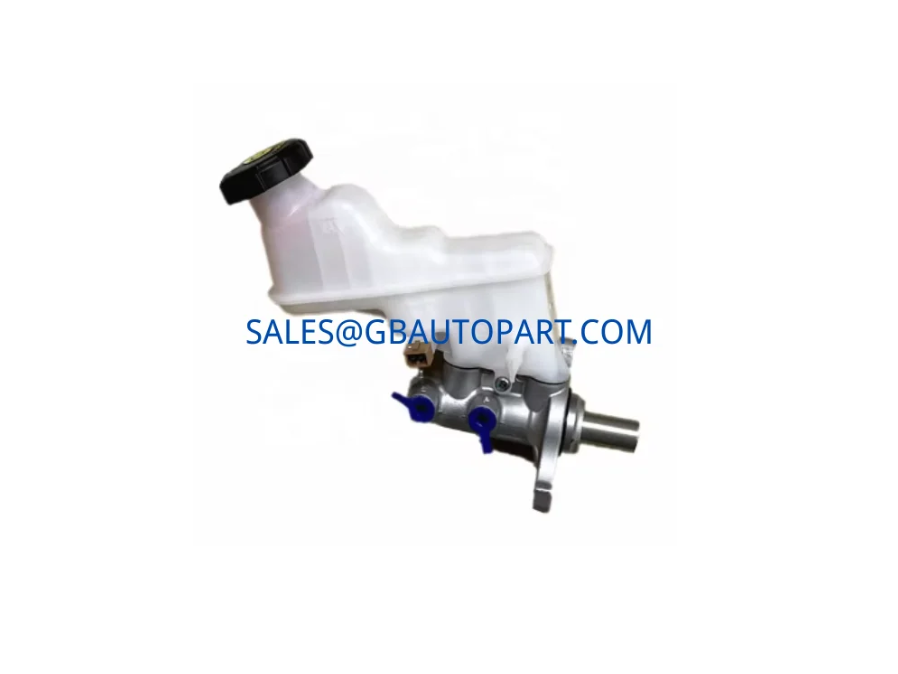
Introduction: The Critical Core of Your Braking System
The safety of any vehicle hinges on the integrity and responsiveness of its braking system. Among the myriad components that make up this vital mechanism, the Brake Master Cylinder, specifically the part numbered 58510-H7800, holds an indispensable position. This single unit is the command center, the heart of the hydraulic circuit that translates a driver’s intention—the simple act of pressing a pedal—into the powerful, controlled force required to bring a moving vehicle to a stop. For owners and service professionals dealing with compatible Hyundai and Kia models, understanding the nuances of the 58510-H7800 is not merely technical knowledge; it is a prerequisite for ensuring road safety and maintaining vehicle performance integrity.
This comprehensive guide is engineered to provide an in-depth, professional analysis of the 58510-H7800 brake master cylinder. We will delve into its operational mechanics, the tell-tale signs of wear, the importance of using a high-quality replacement, and its pivotal role within the broader brake system architecture. Ultimately, this information offers clear, actionable value, guiding users through informed maintenance and replacement decisions. The selection of an authentic or high-grade aftermarket 58510-H7800 is a direct investment in the reliability and, fundamentally, the safety of your automobile.
Understanding the Mechanical Marvel: What the 58510-H7800 Does
At its core, the 58510-H7800 functions as a precise hydraulic pump. Housed within a durable, often aluminum or cast-iron, casing, it contains two separate pistons—the primary and secondary pistons—operating within independent chambers. This dual-circuit design, a standard safety feature in modern vehicles, is critical.
The Principle of Hydraulic Conversion
When the brake pedal is depressed, a pushrod transmits this mechanical force to the primary piston within the 58510-H7800. This piston moves forward, compressing the brake fluid and building up hydraulic pressure. This pressure is then distributed through brake lines to the wheels. This entire process is based on Pascal’s Principle, which dictates that pressure applied to an enclosed fluid is transmitted equally throughout the fluid.
The master cylinder is typically bolted directly to the brake booster, which assists the driver by multiplying the pedal force. Subsequently, the increased hydraulic pressure is channelled to the brake calipers (disc brakes) or wheel cylinders (drum brakes), forcing the brake pads or shoes against the rotors or drums, creating the friction necessary for deceleration. This seamless, rapid conversion ensures the driver maintains control and stopping power under various driving conditions.
The Safety Redundancy of Dual Circuits
The dual-chamber design of the 58510-H7800 provides an essential safety net. The primary chamber often controls the front brakes, while the secondary chamber manages the rear brakes (or sometimes a diagonal split). Should a leak or failure occur in one hydraulic circuit (e.g., a ruptured brake line), the remaining circuit is generally designed to retain full functionality. This ingenious redundancy ensures that some braking capacity is always preserved, giving the driver a chance to safely stop the vehicle. Without a properly functioning 58510-H7800 with intact seals, the brake fluid necessary for this pressure transmission would leak, leading to the dreaded “spongy” or floor-sinking pedal.
Critical Characteristics and Quality of the 58510-H7800 Unit


When sourcing a replacement master cylinder, the quality of the component is paramount, directly influencing the longevity and safety of the vehicle. For a unit like the 58510-H7800, several key features determine its value and performance.
Material Composition and Durability
High-quality master cylinders are manufactured with precision-machined bore surfaces. The cylinder housing, typically crafted from durable materials, resists the constant internal pressure and the corrosive nature of brake fluid (which naturally absorbs moisture over time). Furthermore, the internal seals and gaskets must be made of materials that maintain their integrity and flexibility across a wide range of operating temperatures, preventing leaks and ensuring smooth piston movement. A superior 58510-H7800 will exhibit exacting tolerances, ensuring a perfect seal and precise fluid displacement.
Exact OEM Specification Matching
The replacement part must adhere strictly to the Original Equipment Manufacturer (OEM) specifications, particularly regarding bore diameter and fluid port locations. Even a minor deviation in the bore size of the 58510-H7800 can drastically alter the volume of fluid displaced and, consequently, the hydraulic pressure generated. This would lead to inconsistent braking or a change in pedal feel, compromising safety. Therefore, when purchasing, verifying the exact fitment for the specified vehicle models (such as the Kia Soluto or Hyundai Reina) associated with the 58510-H7800 is non-negotiable.
Recognizing the Signs of Failure in the 58510-H7800
Master cylinders are subject to high pressure and internal wear over time. Identifying early warning signs of a failing 58510-H7800 is crucial for preventive maintenance and avoiding catastrophic brake failure.
The Sinking or Spongy Brake Pedal
The most common and dangerous symptom is a brake pedal that slowly sinks to the floor when pressure is applied, or feels abnormally “spongy.” This phenomenon, known as “internal bypassing,” occurs when the internal piston seals within the 58510-H7800 wear out. Instead of the piston forcing the fluid out to the brake lines, the fluid is allowed to leak past the worn seals, back into the reservoir chamber. This loss of hydraulic integrity means pressure cannot be maintained, directly reducing stopping power.
External Fluid Leaks
An external leak is another clear indicator of a failing master cylinder. Although leaks can occur anywhere in the brake system, leaks appearing near the mounting surface or where the reservoir attaches to the 58510-H7800 unit suggest that the seals or the unit’s housing itself has failed. Any noticeable drop in the brake fluid level within the reservoir should prompt an immediate inspection of the 58510-H7800 and all brake lines.
Contaminated or Low Brake Fluid
While not a direct failure, chronically low or visibly contaminated brake fluid often points back to the master cylinder. The brake fluid may be absorbing excessive moisture (turning dark or cloudy) or could be contaminated with debris from disintegrating internal seals, accelerating the wear of the 58510-H7800. Regular inspection of the fluid is a key maintenance step.
Installation and Maintenance: Ensuring Longevity of the 58510-H7800
The replacement process for the 58510-H7800 demands meticulous attention to detail and a commitment to proper hydraulic procedures. Incorrect installation or oversight of related components can lead to immediate braking failure.
The Importance of Bench Bleeding
Before installation, the new 58510-H7800 unit must be “bench bled.” This process involves mounting the master cylinder in a vise and cycling the pistons to purge all air from the internal chambers. Failing to remove this trapped air will severely compromise the braking performance, as air is compressible while hydraulic fluid is not. This step is indispensable for a successful replacement.
Post-Installation System Bleeding
Once the 58510-H7800 is mounted onto the vehicle, the entire brake system must be thoroughly bled. Air pockets remaining in the lines or at the wheel cylinders will result in a soft, ineffective pedal. Fresh, correct-specification brake fluid should be used exclusively during this process. The use of contaminated or incorrect fluid can damage the seals within the new master cylinder, shortening the lifespan of the 58510-H7800.
Related Component Inspection
During the replacement of the master cylinder, professionals typically inspect surrounding parts. The brake booster, which aids the 58510-H7800 in generating pressure, should be checked for vacuum leaks. Furthermore, the brake pedal’s pushrod adjustment must be correctly set; an improperly adjusted rod can cause the master cylinder pistons to be partially activated at rest, leading to premature wear or overheating.
The Value Proposition: Why Choose Quality Brake Parts from GBAutopart
The decision to purchase an authentic or certified high-quality aftermarket version of the 58510-H7800 is a decision rooted in safety and long-term economy. Cutting corners on such a safety-critical component is simply not advisable.
A cheap, poorly manufactured master cylinder may suffer from soft seals, inaccurate bore tolerances, or inferior casting materials. These deficiencies inevitably lead to earlier failure, often requiring a second, costly replacement shortly after the first, or, more dangerously, an unexpected loss of braking ability. Investing in a reliable 58510-H7800 ensures that the vehicle maintains the precise pedal feel and stopping characteristics engineered by the original vehicle manufacturer.
The ethical responsibility of a parts supplier is to deliver components that meet or exceed safety standards. By focusing on verified, high-quality Brake Parts, your platform provides assurance to vehicle owners and technicians alike. Every part, especially one as essential as the master cylinder, must be a guarantor of performance and, above all, driver confidence.
Conclusion: Driving Forward with Confidence
The Brake Master Cylinder 58510-H7800 is unequivocally a cornerstone of the modern hydraulic braking system for its specific vehicle applications. Its complex, dual-circuit design provides the critical conversion of mechanical force to hydraulic pressure, complete with a vital safety redundancy feature. As a component subjected to immense and repeated stresses, its eventual replacement is a standard part of vehicle maintenance.
Understanding the function and recognizing the failure signs of the 58510-H7800 empowers both the vehicle owner and the service technician to make prudent, safety-conscious decisions. By insisting on high-quality, precise-fit replacement units and adhering to rigorous installation protocols, the optimal performance of the entire brake system is preserved. Ultimately, the correct choice of a component like the 58510-H7800 allows drivers to maintain control and ensures the highest possible degree of safety on the road.
FAQ
Q1: What is the primary function of the 58510-H7800?
A: The 58510-H7800 is the Brake Master Cylinder Assembly. Its primary function is to convert the mechanical force from the brake pedal into hydraulic pressure. This pressure is then distributed to the wheel braking units (calipers or wheel cylinders) to initiate the stopping of the vehicle.
Q2: How do I know if my 58510-H7800 is failing?
A: The two most common signs are a “spongy” brake pedal or a pedal that slowly sinks to the floor when held down, indicating internal fluid bypassing due to worn seals. Additionally, a visible external leak of brake fluid near the master cylinder is a clear sign of failure.
Q3: Is it essential to “bench bleed” a new 58510-H7800 before installation?
A: Yes, bench bleeding is absolutely essential. It involves pre-filling and operating the new master cylinder to remove air from its internal chambers before it is installed on the car. Failing to bench bleed will leave air in the system, resulting in a soft brake pedal and severely compromised stopping ability.
Q4: Can I drive safely if one of my brake circuits fails in the 58510-H7800?
A: The dual-circuit design of the master cylinder means that if one circuit fails, the other should maintain partial braking ability. While this provides a critical safety redundancy, the vehicle should be driven immediately and cautiously to a service center for inspection and replacement of the 58510-H7800 as driving with a partial system is extremely dangerous.